
Traditionalists. ... And Jesus answers, "I have something to say to you."
- F M SHYANGUYA
- Oct 27, 2025
- 5 min read

Updated: Nov 3, 2025
Traditionalist Catholics
Who Are They?
Many traditionalist Catholics dislike the liturgical changes that followed the Second Vatican Council, and particularly emphasize the Tridentine Mass, the Roman Rite liturgy largely replaced in general use by the post-Second Vatican Council Mass of Paul VI, which is disparagingly referred to as the "Novus Ordo".
Some repudiate the Vatican Council in its totality, whilst some accept that it was a valid ecumenical council but reject some of the said Council's teachings.
They see themselves as opposing "The Modernists" and the supposed changes and teachings that these Modernists have introduced into the Catholic Church post the Second Vatican Council. They tend to assign the root cause of the crises within the Church to The Second Vatican Council and to the activities of the said modernists in the years after the Council.
Who Are They? The SSPX
One prominent Traditionalists group is the SSPX [The Society of Saint Pius X (Latin: Fraternitas Sacerdotalis Sancti Pii X "Priestly Fraternity of Saint Pius X", FSSPX)] founded in 1970 by Archbishop Marcel-François Joseph Marie Lefebvre, C.S.Sp. † Deceased , Bishop Emeritus of Tulle, France, who left the Church and died outside of it on 25 Mar 1991 [1].
The SSPX does not reject any popes, but it has a history of conflict and disobedience with popes since the Second Vatican Council, particularly in its opposition to the Council's reforms. The SSPX recognizes the legitimacy of all popes, but believes it has a right to act contrary to them on specific issues related to doctrine and tradition.
On Vatican II, the SSPX hold that:
The actual texts of Vatican II contradict the perennial teaching of the Church on the questions of religious liberty, ecumenism, and collegiality. - Cf. What Is the Position of the SSPX on Vatican II?
It should be noted that Archbishop Lefebvre signed every one of Vatican II’s documents.
And Jesus answers, "I have something to say to you."
The LORD Jesus, through Mother Mary, Our Lady of Guadalupe, His Might, has the following to say to the Traditionalists

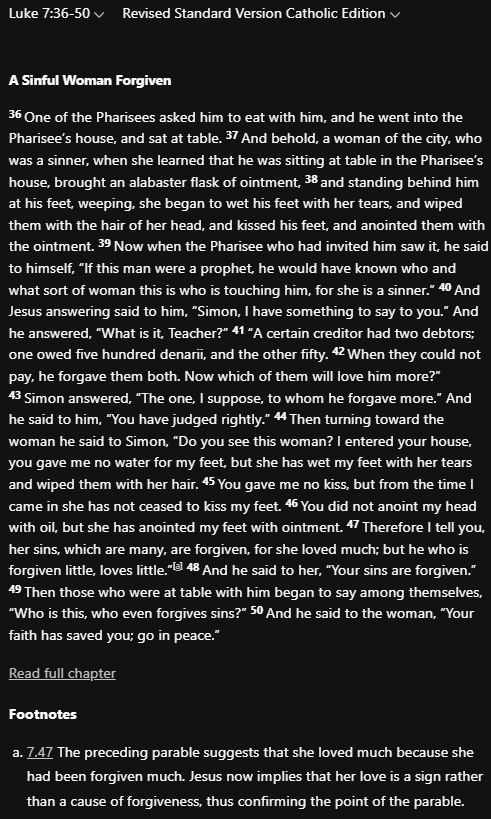
1) Recall the Old Catholics after Vatican I, who separated from the Roman Catholic Church over certain doctrines, primarily concerned with papal authority and infallibility.
2) The Roman Missal promulgated by Pope Paul VI is the ordinary expression of the lex orandi (rule of prayer) of the Catholic Church of the Latin rite.[2]
The SSPX on The Ordinary Form of The Mass[3]

3) The Roman Missal promulgated by Saint Pius V and revised by Blessed John XXIII (1962) is nonetheless to be considered an extraordinary expression of the same lex orandi of the Church and duly honoured for its venerable and ancient usage.[Ibid.]
4) These two expressions of the Church’s lex orandi will in no way lead to a division in the Church’s lex credendi (rule of faith); for they are two usages of the one Roman rite.[Ibid.]
5) The legitimacy of the election of the Supreme Pontiff or of the celebration of an ecumenical council[4], the canonizations of saints[5] are dogmatic facts. These are some of the examples of the truths of the second paragraph cf . Congregation For The Doctrine Of The Faith > Profession Of Faith.
The one who denies these truths would be in a position of rejecting a truth of Catholic doctrine and would therefore no longer be in full communion with the Catholic Church.
The Society of Saint Pius X does not possess a canonical status in the Church
This disciplinary level needs to be distinguished from the doctrinal level. The fact that the Society of Saint Pius X does not possess a canonical status in the Church is not, in the end, based on disciplinary but on doctrinal reasons. As long as the Society does not have a canonical status in the Church, its ministers do not exercise legitimate ministries in the Church. There needs to be a distinction, then, between the disciplinary level, which deals with individuals as such, and the doctrinal level, at which ministry and institution are involved. In order to make this clear once again: until the doctrinal questions are clarified, the Society has no canonical status in the Church, and its ministers – even though they have been freed of the ecclesiastical penalty – do not legitimately exercise any ministry in the Church. - Cf. Letter Of His Holiness Pope Benedict XVI To The Bishops Of The Catholic Church Concerning The Remission Of The Excommunication Of The Four Bishops Consecrated By Archbishop Lefebvre
The Church’s teaching authority cannot be frozen in the year 1962 – this must be quite clear to the Society. But some of those who put themselves forward as great defenders of the Council also need to be reminded that Vatican II embraces the entire doctrinal history of the Church. Anyone who wishes to be obedient to the Council has to accept the faith professed over the centuries, and cannot sever the roots from which the tree draws its life. - [Ibid]
6) On King Charles III and Queen Camilla meeting with Pope Leo XIV
'O God, I thank you that I am not like the rest of humanity - greedy, dishonest, adulterous -- or even like this tax collector. I fast twice a week, and I pay tithes on my whole income.'

The LORD Jesus Christ Now Repeats His Indictment and Condemnation of The SSPX and The Traditionalists.
[2] Pope Benedict XVI > Apostolic Letter > Given Motu Proprio > Summorum Pontificum > On The Use Of The Roman Liturgy Prior To The Reform Of 1970, Art 1.
[3] Cf. Comment About Archbishop Marcel-François Joseph Marie Lefebvre, C.S.Sp. † and his Paradoxical Position
“Traditionalists” such as the French Archbishop Marcel Lefebvre, on the other hand, were convinced that the condemnation of religious liberty by the popes of the 19th century was forever binding, and that therefore the teaching of the Council was wrong. Lefebvre submitted his argument to the Congregation for the Doctrine of the Faith in the form of dubia, and his dissatisfaction with the Congregation’s response was a decisive factor in his decision, carried out on June 30, 1988, to consecrate four bishops without papal mandate, thus incurring excommunication latæ sententiæ. Lefebvre’s position was somewhat paradoxical, as the then prefect of the Congregation for the Doctrine of the Faith, Joseph Cardinal Ratzinger, pointed out: by putting his own private interpretation of previous Church teachings above the Church’s official interpretation of her teaching he was giving up precisely the principle of fidelity to Church doctrine that he wanted to defend.
[4] Cf. They Who Reject the Decisions of Councils Are Themselves Rejected by the Church; Ecumenical Councils Q&A
[5] The visceral hatred that the Traditionalist have for Pope St John Paul II The Great, who is universally loved, revered, and whose reputation for sanctity is similarly acknowledged even among non-Christians, was one among other things that made me take a critical look at the Traditionalists. In this, they are aligned with the enemies of the Church.


Comments